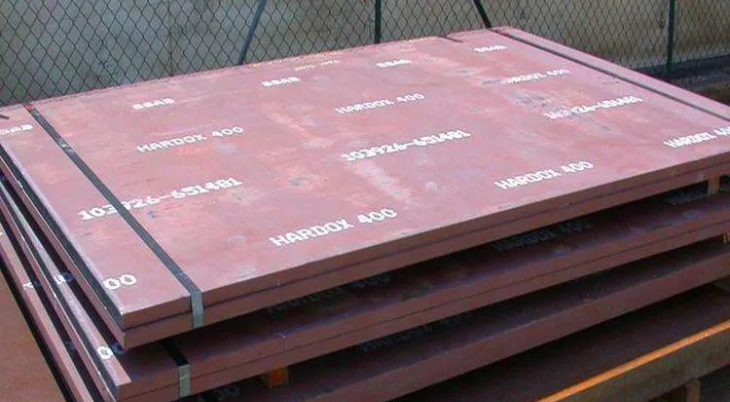
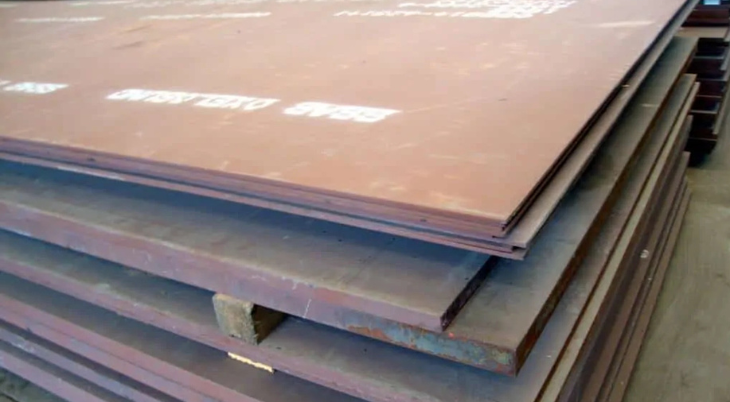
AR is a very wear-resistant sheet steel. AR is imported and exported worldwide by the Champak
Industries. As this steel wears slowly, even under huge mechanical loads, AR is also called wear
plate. this fact is mainly interesting for companies that quarry gravel and sand as, for
example, excavator buckets or unload truck our bodies made from hardox ultimate rapid
longer.
This material is characterised by its uniform evenness, high hardness and high strength. The
weight of the constructions produced is reduced significantly. This is possible, because the
material's high strength enables thinner steel sheets to be used. AR does not lose its impact
resistance, even at low temperatures. As these sheets and plates have very good welding and
machining properties, subsequent repairs of wearing parts is not a problem.
By choosing Wear plates with higher hardness levels it is possible to reduce the weight of a
construction by up to 15 %. An increase by 50 Brinell extends the life of the work piece by 50
to 80 percent.
AR plates Hardening (quenching) and tempering sheets and plates produces the outstanding
properties, which can be lost if worked incorrectly. Therefore precautions and protective
measures must be taken when bending, welding, cutting and grinding.
AR Flexibility – Bending and Folding
AR plates or wear plates with high strengths can be cold worked by bending and
roll bending. Due to the higher strength, however, factors must be applied to ensure that the
bending and roll bending can be carried out with the best possible quality.
Rules for Bending and folding
• The bending forces to be applied increases with the increasing strength of the material.
• Metal sheet and plate with higher strength springs back during bending more than normal steel
sheets and plates.
• The harder and stronger the metal sheet or plate is, the larger the punch radius and die width
that have to be chosen.
Metal Plates surface
Defects and rust deposits can reduce flexibility. Therefore, before bending and
folding AR such defects must be ground off. During the bending process the machine operator
should stand to the side of the press brake, as the high forces that act on the high-strength
steel plate can cause cracks in the surface and parts of the work piece surface can shoot off in
the bending direction.
The measures are recommended to avoid vibrations and damage
• small distance between the drill bit and machine pillar
• clamp the work piece securely
• do not insert any wood under the work piece
• Use short drill bits and machine spindles, in order to minimize the distance between the tip
of the drill and the cantilever arm
• Relax the drill just before penetrating the material, by switching off the feed briefly. This
protects the drill against damage.
• Use plenty of cooling liquid (cooling liquid [l/min] ~ drill bit diameter [mm]
A comparison of different AR grades
AR 400
• Sheet thickness 3 – 130 mm
• Brinell hardness 370 – 430
AR 450
• Sheet thickness 3 – 80 mm
• Brinell hardness 425 – 475
These are used if a combination of high wear resistance and good cold working properties is
required. These sheets and plates are used, for example, to produce dumper trucks, screens,
chutes, rock crushing machines, excavators and conveyors. These steel grades are characterised
by their very good weld ability.
AR 500
• Sheet thickness 4 – 32 mm
• Brinell hardness 470 – 530
• Sheet thickness 32 – 80 mm
• Brinell hardness 370 – 430
AR 550
• Sheet thickness 10 – 50 mm
• Brinell hardness 525 – 575
These are used if high requirements are necessary with regard to wear resistance.
These sheets and plates are used, for example, to make conveyors, blades and cutters, buckets
for excavators, gear wheels and crushing plants.
The material must not be heated above 250°C, as otherwise the sheet or plate can lose its
outstanding properties.
AR 600
• Sheet thickness 8 – 50 mm
• Brinell hardness 560 – 640
This is used if high requirements are necessary with regard to wear resistance. This sheet /
plate is used, for example, to make chutes, crushers, hammers and shredders.
AR HiTuf
• Sheet thickness 40 – 120 mm
• Brinell hardness 310 – 370
This is used if extremely high requirements are necessary with regard to toughness (ductility)
and wear resistance. It is used to make, for example, demolition tools and cutting
edges.
AR Extreme
• Sheet thickness 10 mm
• Brinell hardness 700
• Sheet thickness 25 mm
• Brinell hardness 650
This is used if extremely high requirements are necessary with regard to wear resistance.
This sheet / plate is used, for example, to make hammers, crushers, wear protection plate
(armour plate) cutting equipment.
Use plenty of cooling liquid (cooling liquid [l/min] ~ drill bit diameter [mm]
Today this steel is available in the grades: AR 400 / 450 / 500 / 550 / 600 / HiTuf or even
Extreme. These differ with regard to their hardness, toughness, flexibility and the possibility
of welding.